Drywall Repair in Edna, TX
Storm water through the ceiling, AC drain overflows, settling cracks and knocked-in holes, opened up, dried out, rebuilt and texture-matched so the repaired spot blends into the room around it.
Tell us what went wrong; the Edna-area pro who will handle the repair calls you back to price it.
Call 7 days, 7am–9pm
01Texture, dust, timing and other worries
Can the spatter on a new patch look like the rest?
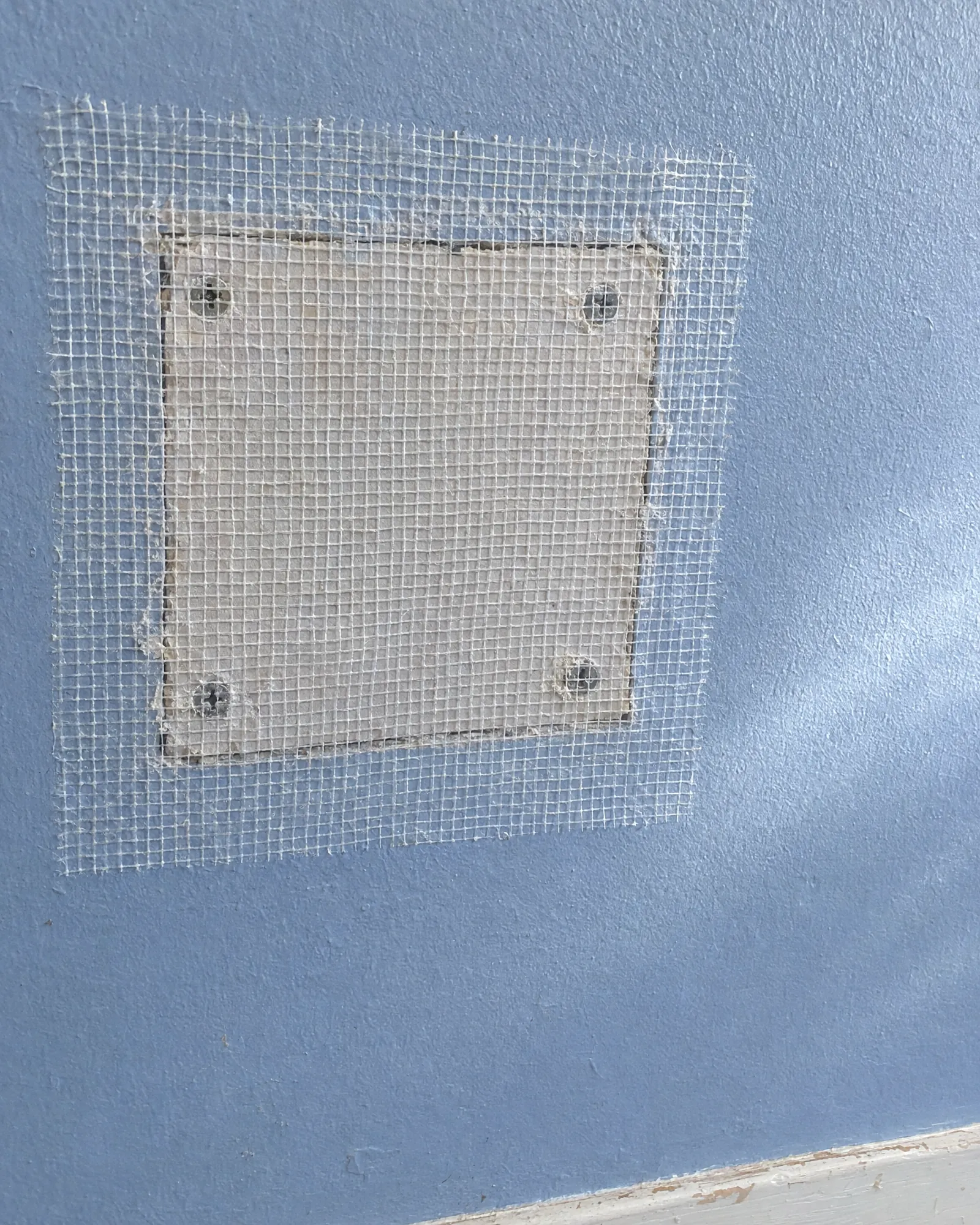
Usually. Sprayed spatter and knife-flattened patterns get rebuilt using whichever method created them originally. A trial on scrap cardboard comes first, so droplet size and spacing can be adjusted before anything touches your wall. Heavily repainted walls have softer bumps, so the mix gets thinned to suit.
One doorknob hole: too small to bother with?
Not at all. One gouge or a single torn corner deserves a proper fix as much as anything bigger. Got several little dings in different rooms? Mention every one when you get in touch, and they can all go on one estimate.
Painted over, is the old hole still detectable?
Fresh joint mud is thirstier than painted gypsum, so one coat over it can leave a dull or shiny outline. Primer over the repair, followed by rolling the entire wall from one corner across to the other, makes that much less noticeable.
How many days does a repair stretch over?
Every pass of mud must set up fully ahead of another, so even a modest patch normally spans two or more days. Muggy summer air adds drying time, and a soaked ceiling needs its dry-out finished before fresh gypsum goes up.
Sanding dust: how bad, and how is it kept in?
Sanding mud throws off dust about as fine as flour, and it drifts. Plastic sheeting taped over the doorway, cloths underfoot, the closest return grille covered and a HEPA vacuum at the end keep most of it where it belongs. A box fan in an open window, blowing outward, helps too.
Water is bulging the ceiling. What first?
Head to the electrical panel and switch off power to the fixture closest to the bulge, whether light or fan. After that, nobody, dogs and cats included, should stand underneath it; slide the sofa or bed out of range and set a mop bucket where it drips. Keep hands off the bulge itself.
02Four notes to make with the damage in front of you
Four quick jobs make that first conversation about your wall far more useful. The longer prep list for homeowners adds attic photos and a few things to leave alone.
Two photos, wide and close
Stand in the doorway for one shot of the whole surface, then hold a tape against the damage for a second.
Tape measure numbers
Get how wide and how tall the mark is, plus its rough distance from the closest corner or fixture.
Breakers and the thermostat
Water anywhere near a fixture means its circuit goes off. An AC drip means the thermostat goes to off.
When it showed up, and any growth since
Jot down when the damage appeared, what rain or heat wave came just before, and if it keeps spreading.
03Storm, AC, settling, texture: the four repair pages
Most drywall repair around Edna sorts into four groups. Causes differ, and so does the sequence a proper repair follows, which is why each one has a page to itself.
Roof-leak ceiling stains and sags
Rain that slipped past shingles leaves a brown ring, spongy gypsum or a droop; that section is removed, dried and rebuilt.
Condensate overflow damage near the AC
A plugged drain line or rusted pan wets the board beside the air handler, which gets rebuilt after the drain flows again.
Settling cracks in walls and ceilings
Slanted lines off door corners, seams that split open again and again, all re-taped and finished flat.
Texture rebuilt to blend
Spray spatter, flattened blobs, hand-troweled swirls or a plain face, recreated so new work sits quietly beside the old.
04Garage partitions and laundry-room wicking
Garages and laundry rooms take abuse the bedrooms never see. Swinging car doors, handlebars and mower handles gouge the lower half of the wall, while a weeping tank heater or a cracked supply hose behind the washer wicks moisture up into the gypsum for weeks unnoticed.
An attached garage shares a partition with the living space, and that partition is meant partly to slow a fire. A patch in that partition ought to match whatever came out, frequently thicker Type X gypsum built to resist fire, with each joint taped and no gaps left around pipes. Ask for like-for-like there rather than a stray scrap screwed over a hole.
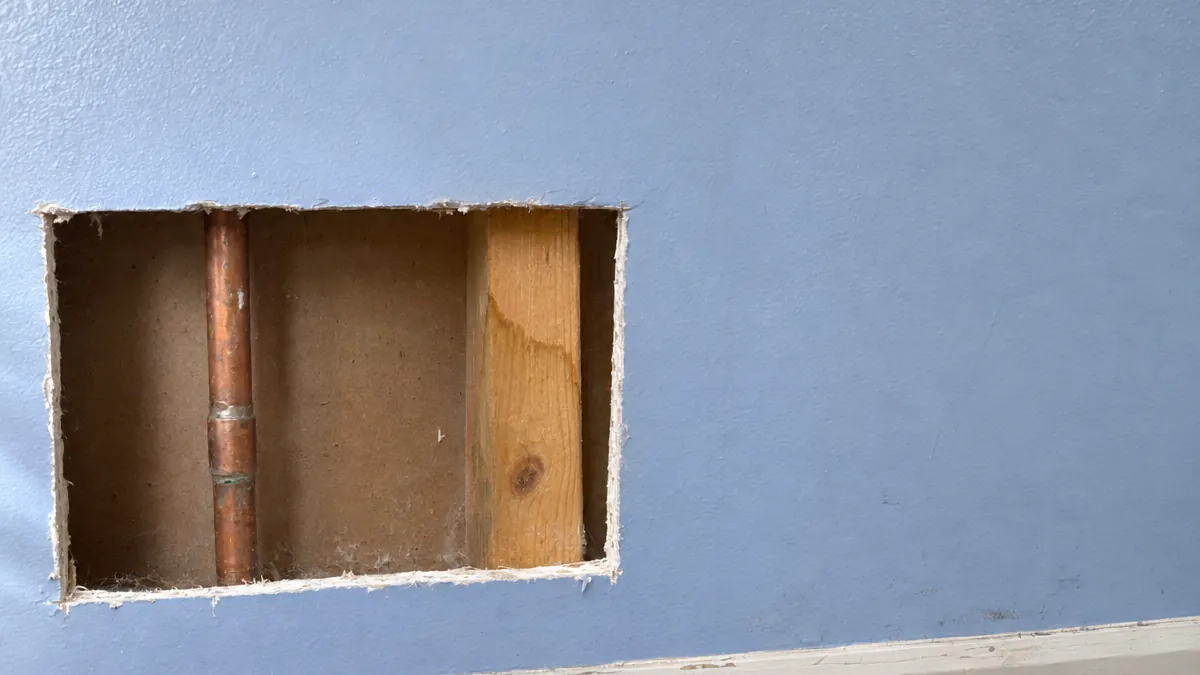
Where water reached the lower wall, the usual fix removes a strip of gypsum slightly higher than the tallest wet mark, so no damp paper hides inside. Leave that gap uncovered until a meter says the framing, sill plate included, has dried out. During an Edna summer, a dehumidifier plus a fan in that room shortens the wait considerably.
05Six stages between a phone call and primer
Whether it is one doorknob gouge or a storm-soaked ceiling, a repair passes through these six steps.
- Your call or photoExplain what happened, where it is, and if it is still wet or dripping.
- A local pro phones backWe have a nearby drywall specialist ring you to talk the damage over.
- Priced before work beginsThe estimate spells out patch size, texture and primer, and you decide.
- Leak stopped, framing driedRoof, drain or pipe gets fixed first; damp gypsum dries out or comes out.
- Gypsum, tape, thin layersFresh board goes up, joints get taped, and the mud goes on in several thin passes with drying time between.
- Textured and primedThe surface is blended into its surroundings and sealed with primer for your paint.
06Spackle-sized jobs versus contractor-sized jobs
Plenty of small fixes need nothing more than a flexible blade, lightweight spackle, a sanding block and a little primer. Wear a dust mask while sanding, and keep a window open.
Weekend-sized fixes
- Nail pops, those small round blisters where a fastener has crept outward
- Dings and holes smaller than a quarter, filled with lightweight spackle
- Hairline cracking inside a closet, where a slightly visible fix bothers nobody
Jobs for a drywall contractor
- Gypsum that feels spongy, crumbles or carries a brown tide line, all signs water is still inside
- A drooping ceiling, or a ring that reappeared through fresh paint
- Any crack that splits open along the identical line after being filled
- Openings bigger than a hand, or damage close to an outlet, switch or supply pipe
- Textured rooms where guests would spot a mismatched patch
Planning to cut into a wall yourself? Shut off that circuit first and keep the blade shallow, because supply lines and cable share those same cavities.
To give a rough idea, Bob Vila's guide to repairing drywall quotes Fixr: professionals charge from $75 upward for holes no wider than 4 inches, and $200 to $550 when one room has multiple holes and cracks. Those are US-wide averages, not Edna figures. Your own estimate depends on how big the damage is, any moisture involved, the texture and how much wall needs painting.
07US 59, SH 172 and the towns between
- Edna. Seat of Jackson County, with US 59 skirting the northwest edge of town.
- Ganado. A Jackson County city northeast of Edna, also on US 59.
- Lolita and Vanderbilt. Two small places to the south; Vanderbilt is 13 road miles from Edna.
- La Ward. A small city 17 miles to the southeast, where SH 172 crosses FM 616.
- Inez and Louise. Inez sits southwest on US 59 inside Victoria County; Louise lies northeast on that highway in Wharton County.
Each place gets its own short paragraph on the Edna-area towns page.
08The order of a well-protected repair day
Every repair differs a little, yet a careful one keeps to a familiar sequence. Raise these points when the estimate is being set, so you know what the day involves and how other rooms are shielded from it.
- Power and waterBreakers feeding lights, fans or receptacles nearby go off before a damp ceiling or wall gets opened.
- Protecting the roomCloths cover the floor, furniture gets shifted or wrapped, sheeting seals the doorway, and the closest return grille is masked off so dust never reaches the ductwork.
- Opening and prepRuined gypsum comes off until sound board remains, wet batts get bagged, and meter readings on the wood must come back dry before the cavity is sealed.
- Layers of mudTape gets embedded first, then two or three progressively thinner, wider layers so the edges fade out.
- DryingEach layer hardens before another goes on. Damp coastal air can drag this out; a dehumidifier speeds things along.
- CleanupA HEPA vacuum collects sanding dust, scraps go into bags, and a coat of primer seals the new surface.
09Railroad town, mid-century growth, humid air
Edna began in 1882, when the New York, Texas and Mexican Railway was built between Rosenberg and Victoria and bypassed the old county seat at Texana. Voters moved the seat to Edna in 1883, and the town was named for a daughter of Count Joseph Telfener, who promoted the railroad.
Texas Almanac numbers reproduced in the Handbook of Texas show 1,752 residents in 1930 and 5,038 by 1960; by 2020 Edna had 5,987. So much of the town's growth happened in those middle decades. Houses from that period may have plaster, early gypsum board or paneling nailed over board. Plaster and gypsum are patched in quite different ways, so tell us roughly when yours was built.
Of Edna's 2,637 dwellings in 2020, 17.8% sat vacant. An empty house, or a rental waiting on its next tenant, can take water through a storm with no one around to notice a ring forming. After heavy rain, walk through and look up at each ceiling.
Under the Köppen scheme, Edna's climate code is Cfa, humid subtropical, and summers run hot and sticky. Air conditioners run long stretches of the year here, which helps explain why overflowing condensate shows up on ceilings about as readily as roof leaks.
10Your request, start to primed board
Edna Drywall Repair is who you ring when a wall or ceiling needs putting right. We pick up, hear what happened and study any pictures that come through. From there we line up an Edna-area drywall contractor, who phones you, discusses the damage and works out an estimate.
Work waits for your approval of that estimate. Scheduling fits around your household, the repair gets done, and you end up with a flat, blended surface sealed with primer and waiting for paint. Our outline of how each request is handled walks through it in more detail.
11Write up the wall and send it
Say which room, what you think started it and about how large it is. Any ongoing drip or active leak belongs in the first line.
Once your note comes in, a nearby repair pro gets on the phone with you about it and sets up the estimate.
12Ring, text a snapshot or read up first
One conversation sorts out the details; the local pro doing the job then prices it with you.